
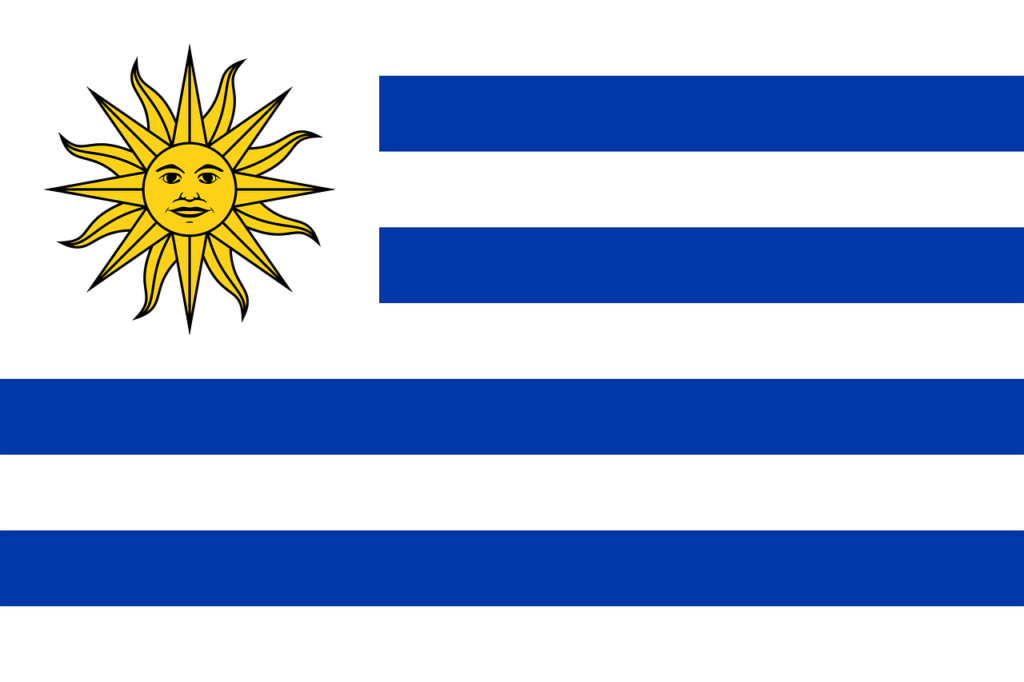
 The inaugural FIFA World Cup was staged at three venues, all in the Uruguayan capital, Montevideo, between July 13 and July 30, 1930. The tournament format consisted of one group of four teams and three groups of three, with the top team in each group advancing to the semi-finals. Originally, FIFA has invited 16 teams to participate, but Japan and Siam (now Thailand) both withdrew Egypt missed their departure to South America.
Seeded into Group 3, alongside Romania and Peru, the hosts, Uruguay, qualified for the semi-finals with maximum points. Forward Héctor Castro scored the only goal in a 1-0 win over Peru at the purpose-built, 90,000-capacity Estadio Centenario and fellow forwards Pablo Dorado, Héctor Scarone, Peregrino Anselmo and Pedro Cea all found the net before half-time in a 4-0 win over Romania at the same venue a week later.
In the semi-final, Uruguay faced Yugoslavia, who had likewise qualified from Group 2 with maximum points, at the expense of favourites Brazil, whom they beat 2-1 at Estadio Gran Parque Central in their opening match. Again at Estadio Centenario, Đorđe Vujadinović opened the scoring for Yugoslavia after four minutes, but thereafter it was one-way traffic, with Pedro Cea socring a hat-trick and Uruguay eventually 6-1. Coincidentally, the other semi-final between Argentina and the United States at the same venue the previous day had also finished 6-1 in favour of the Argentinians.
The World Cup final was a thrilling, see-saw affair, with three goals in the first half and three in the second. Dorado opened the scoring for Uruguay after 12 minutes, but winger Carlos Peucelle equalised for Argentina eight minutes later and team-mate Guillermo Stábile gave his side a 2-1 lead eight minutes before half-time. Cea levelled the scores after 57 minutes and outside left Santos Iriarte gave Uruguay the lead back, 3-2, after 68 minutes. La Celeste made certain of the result with a fourth goal, scored by Castro a minute from time, and captain José Nasazzi duly became the first to lift the Jules Rimet Trophy, or ‘Victory’, at the trophy was known prior to 1946.